Personal review – from me, as the author
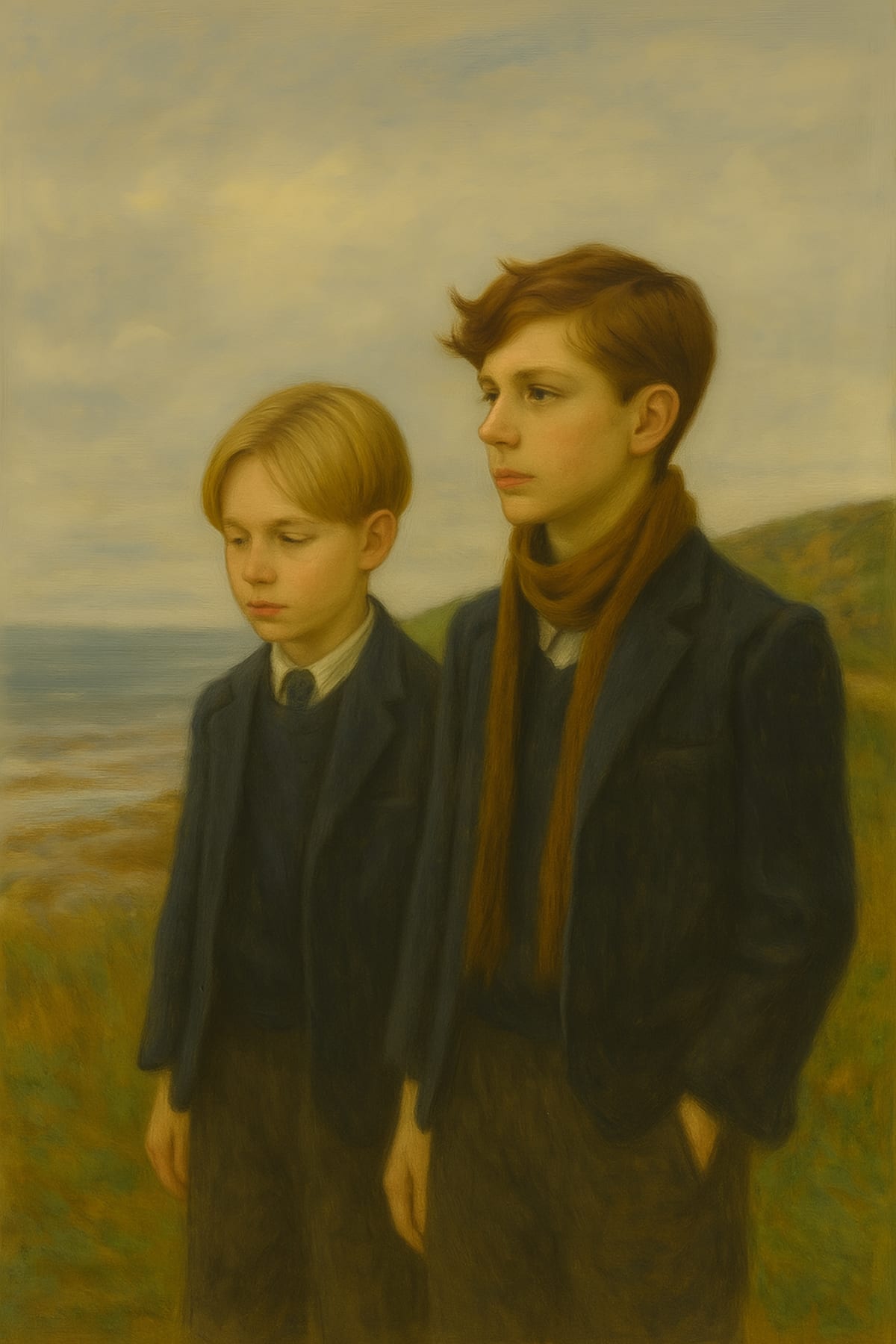
The Bell at Low Tide is the first story where I really let myself write the kind of book I most love to read: slow, coastal, a bit haunted, and more interested in the hush between people than in the big, showy moments. It began with one image—two boys standing on a winter shoreline, both of them hearing a bell no one else could hear—and the whole novella grew out of that question: what happens to you when you spend a term listening for something invisible, and then for someone who may never come back? I wrote this book back in 2011 when I living in Caerleon, Wales and studying for my BA (Hons) English with Creative Writing. I only got around to proof-reading and editing it properly this summer.
I wanted Marlen Abbey to feel like a living organism rather than just a backdrop: a place that stores the impressions of every boy who passes through it. The corridors, cloisters, tide maps and observatory are all doing as much emotional work as the characters. Théo’s inner life is quiet on the surface, but the school and the coastline give him a language—bells, tides, still water—for things he can’t yet name: homesickness, queer longing, the thin line between reverence and fear. Writing those textures—the cold on the stair-rail, the way silence shifts after a boy disappears, the sea holding its breath on the “day of no tides”—was my way of honouring how intense and complicated adolescence can be even when outwardly “nothing happens.”
This book is a love letter to quiet listeners: the ones who stand at the edge of things and notice everything. It’s also about how affection and devotion can exist in very small gestures—a folded pair of gloves, a fish bone left on a windowsill, a tide chart annotated in pencil; about how a relationship can change you even if it never gets the language it deserves. By the end, Théo doesn’t get a grand resolution or a neat explanation. Instead, he comes away with a different understanding of silence: not as punishment, but as something he can carry, like a bell within him. That’s the note I wanted the book to leave ringing. If you do read it, my hope is that some small fragment—a line, an image, a shift in the light over the mudflats—settles in you and hums on quietly after you’ve closed the final page.